


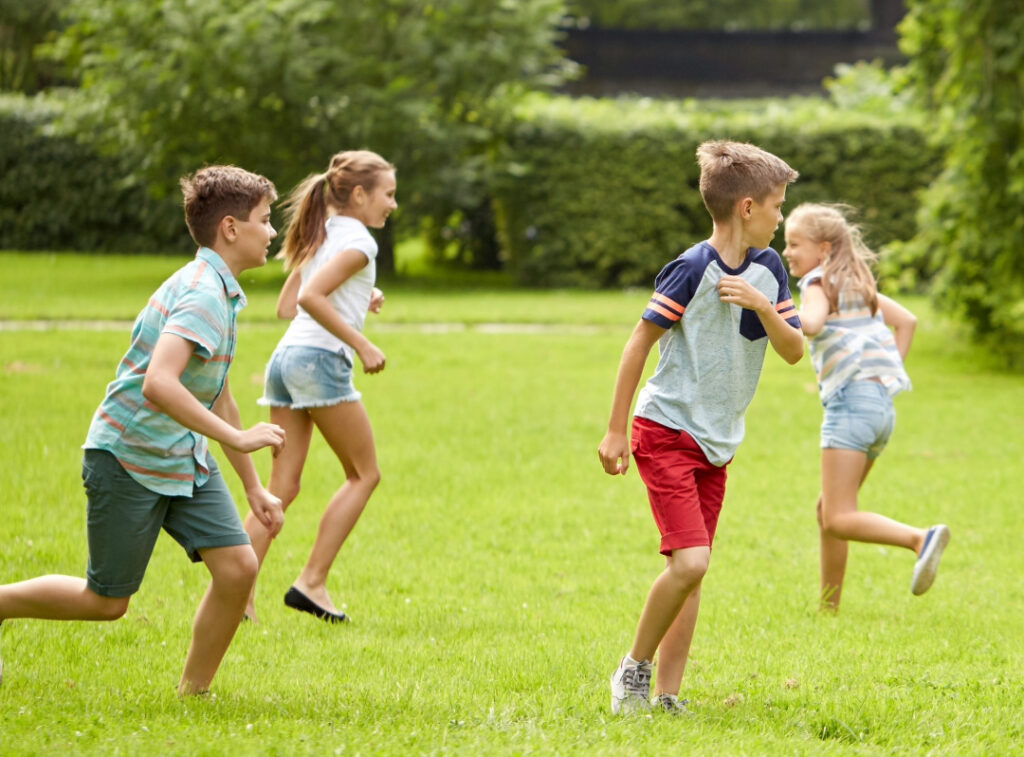
Watch a group of children at play, and you may notice something that is difficult to put into words.
Some children run, climb, balance, build, and move through space with ease. Others seem unsure of where their bodies are. They may struggle to balance, hesitate before stepping over an obstacle, bump into objects or other children, or have difficulty coordinating movements that once seemed like an ordinary part of childhood.
Not every child develops in the same way or at the same pace, and physical awkwardness can have many causes. But it is fair to ask a larger question:
Are children getting enough opportunities to learn how to move?
For generations, much of childhood was spent in motion. Children walked to friends’ houses, climbed trees, built forts, rode bikes, chased one another, carried unwieldy objects, invented games, and navigated their neighborhoods. None of it looked like a lesson plan, but their bodies were learning all day long.
Today, childhood often looks different. School days are highly structured. Recess competes with academic demands. Afternoons fill with homework, transportation, scheduled activities, and screens. Safety concerns can limit children’s freedom to roam and explore. Technology is not solely responsible for this shift, nor is all technology harmful. But when digital time replaces active, physical experience, something essential can be crowded out.
Movement is not simply exercise. Movement is part of human development.
Children Learn Their Bodies by Using Them
Balance, coordination, body awareness, and the ability to judge space are not built by watching someone else move. They develop through experience.
Children learn by stepping across an uneven surface, crawling under something, reaching above their heads, carrying an object that changes their center of gravity, and adjusting a structure when it begins to lean. They learn how much force to use, how far to reach, when to slow down, and how to recover when something does not go as planned.
These experiences help develop fundamental movement skills—the building blocks behind actions such as running, jumping, hopping, throwing, catching, kicking, and balancing. Research has consistently found a positive relationship between children’s movement skills and their physical activity. In other words, children who become more capable movers are also more likely to participate in movement, while children who feel less competent may be more likely to avoid it. That can create a cycle: less movement means fewer chances to improve, and fewer skills can make movement feel even less inviting.
This is why simply waiting for children to “grow out of” awkward movement is not always enough. Children need time, space, encouragement, and repeated opportunities to move in many different ways.
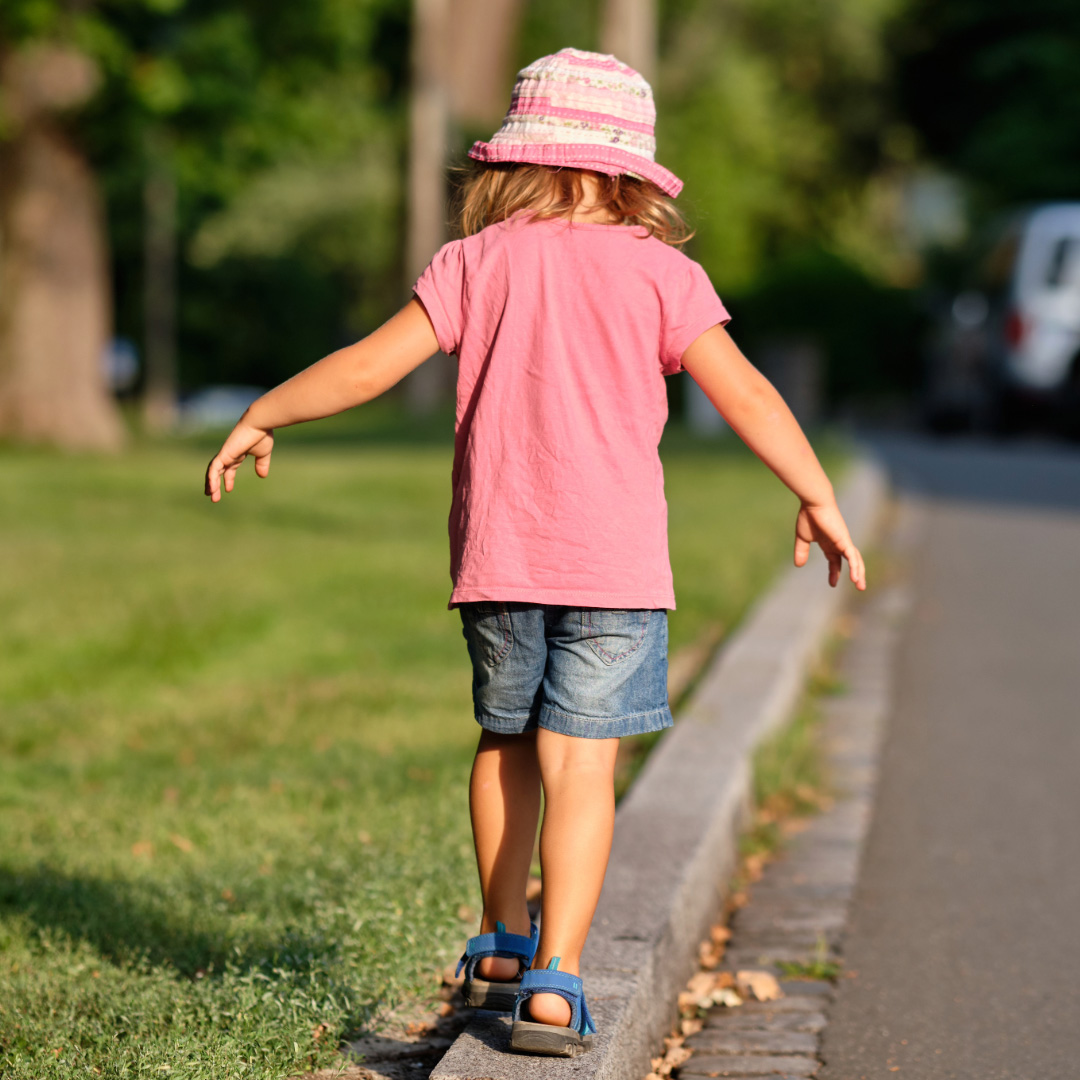
The Modern Movement Gap
The difference between childhood today and childhood decades ago is bigger than the arrival of smartphones or tablets. It reflects a long-term shift in how children spend their time.
Research has documented a generational decline in children’s independent mobility—the freedom to travel, explore, and play beyond constant adult direction. At school, pressure to prioritize academics has often reduced time and space for gross-motor play. At home, busy family schedules, limited access to safe play spaces, and understandable safety concerns can make independent outdoor play difficult.
Screens then enter an already crowded day.
The concern is not that every minute spent with technology is damaging. Technology can support communication, creativity, access, and learning. The more useful question is: What is technology replacing?
The American Academy of Pediatrics now encourages families to consider what media use may be “crowding out,” including sleep, reading, relationships, physical activity, and play. That distinction matters. A child can learn information from a screen, but a screen cannot give the body the physical experience of balancing on a moving object, maneuvering through a tight space, lifting something large, or coordinating a plan with other children in real time.
The national numbers reinforce the concern. Children ages 6–17 are advised to get at least 60 minutes of moderate-to-vigorous physical activity each day. Yet according to the 2023–2024 National Survey of Children’s Health, only 25% of children ages 6–11 were physically active for at least 60 minutes every day during the previous week. In other words, three out of four elementary-age children were not reaching the daily recommendation.
Those figures measure physical activity, not the full richness of play. A child may meet an exercise target through an organized sport and still have very little time to explore, invent, take manageable risks, or direct their own movement. Children need opportunities for both intentional physical activity and open-ended play.
Play Develops More Than Muscles
When children move through play, the benefits extend far beyond physical fitness.
They make decisions: Can I reach that? Will this hold? What happens if I move this piece?
They solve problems with their whole bodies. They negotiate space and ideas with other children. They experience manageable frustration, adjust their approach, and try again. They learn to assess risk rather than expecting every challenge to be removed.
The American Academy of Pediatrics describes play as essential to the development of executive function, collaboration, creativity, problem-solving, and school readiness. Research on outdoor and adventurous play also points to benefits for physical activity, confidence, resilience, and social-emotional development. Environments with movable “loose parts” are especially valuable because they invite children to lift, carry, combine, redesign, and experiment instead of following one predetermined path.
This is what makes play so powerful: the body, brain, imagination, and social world are developing at the same time.

Recess Is Not a Break From Development
As children return to school, movement cannot be treated as something that happens only after the important work is finished.
The American Academy of Pediatrics has repeatedly affirmed the crucial role of recess. Its updated 2026 policy statement describes recess as beneficial to children’s physical and mental health and to the teaching and learning environment. Movement can support attention, memory, mood, and classroom readiness. Unstructured peer play gives children a type of learning that cannot be recreated by adding another worksheet—or another educational app.
Protecting recess is a start, but children also need movement throughout the day: active transitions, outdoor learning, brain breaks, hands-on construction, and play environments that allow ideas to become physical.
The goal is not to keep children constantly busy. It is to give them enough freedom and possibility that movement arises naturally.
Restoring Movement Without Rejecting Technology
This does not require families or schools to eliminate technology. It requires us to protect what technology cannot replace.
We can begin by asking:
- Does every part of this lesson need a screen?
- Is recess being protected as essential developmental time?
- Do children have access to materials they can lift, carry, connect, balance, and transform?
- Are there opportunities to play without adults deciding the final outcome?
- Can we create screen-free parts of the day rather than relying only on total time limits?
- Are children allowed to encounter manageable physical challenges and discover what their bodies can do?
At home, this might mean an outdoor hour after school, a walk without devices, a basket of open-ended materials, or time to play before homework begins. In schools, it might mean protecting recess, adding movement breaks, taking learning outdoors, or creating spaces where children can build at full-body scale.
The solution does not have to be complicated. Children already possess the instinct to move, investigate, create, and imagine. Often, our job is simply to make room for it.
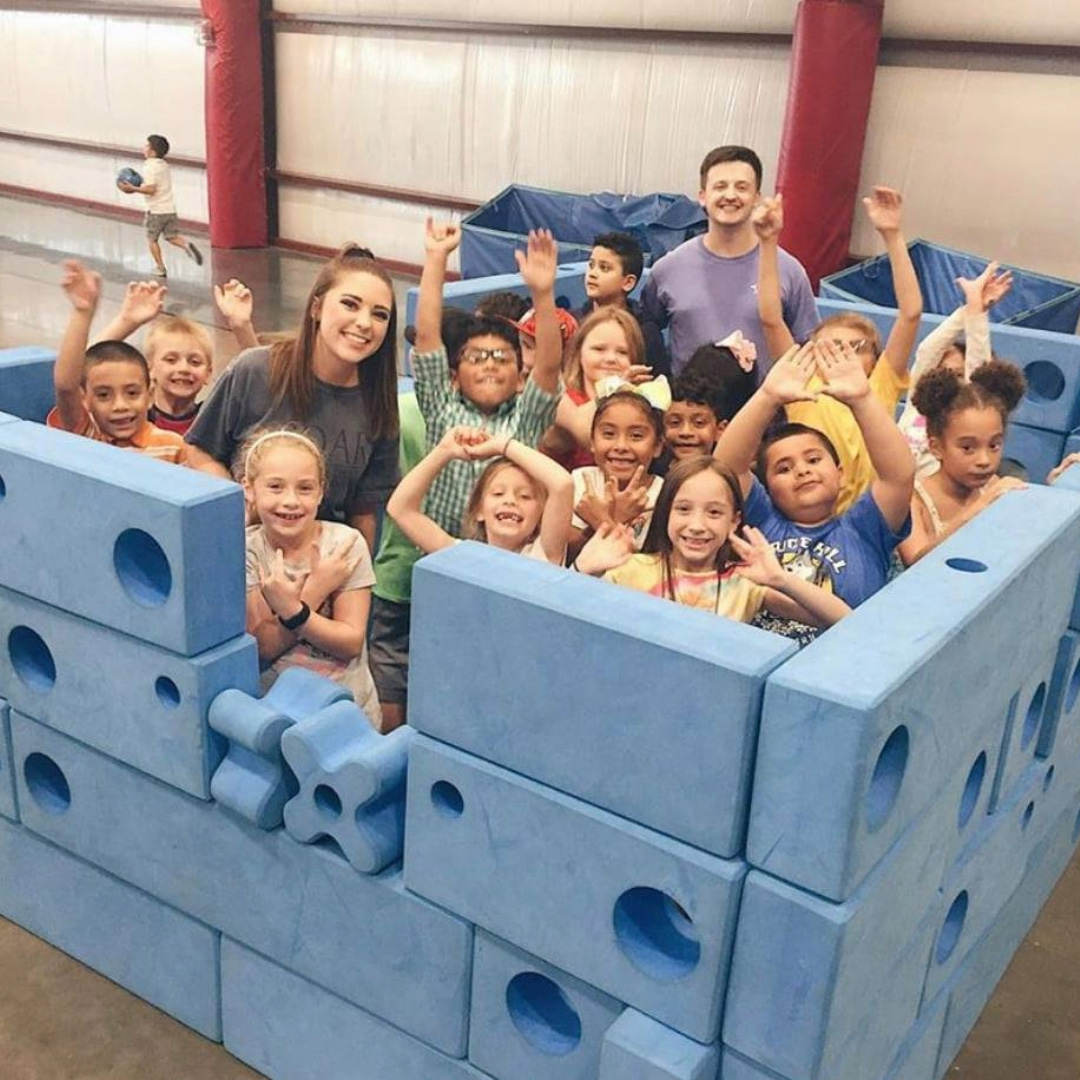
More Than Blocks: An Invitation to Childhood
At Imagination Playground, we believe play is not an extra—and our Big Blue Blocks are not simply objects.
They are an invitation.
An invitation to lift something large and discover how it feels. To carry, reach, bend, stretch, stack, connect, balance, and build. To move through space and change that space through imagination. To create something that did not exist before, test it, watch it fall, and begin again.
There is no single correct answer and no screen directing the next step. The child leads. The body participates. The imagination decides what is possible.
Because children were not born only to sit, watch, and receive information. They were born to explore it—to move through the world, create within it, and learn what they are capable of.
Imagination Playground is more than a collection of blocks. It is an invitation for children to do what they were born to do: move, create, imagine, and play.
One Block at a Time.
Research and Resources for Further Reading
- The Power of Play: A Pediatric Role in Enhancing Development in Young Children — American Academy of Pediatrics
- Digital Ecosystems, Children, and Adolescents: Policy Statement — American Academy of Pediatrics, 2026
- The Crucial Role of Recess in School: Policy Statement — American Academy of Pediatrics, 2026
- Physical Activity Guidelines for School-Aged Children and Adolescents — Centers for Disease Control and Prevention
- Physical Activity Behaviors Among High School Students: 2023 Youth Risk Behavior Survey — Centers for Disease Control and Prevention
- Children’s Independent Mobility: Current Knowledge and Future Directions — systematic review of research on children’s freedom to travel and play independently
- Association Between Fundamental Motor Skills and Physical Activity in the Early Years — systematic review and meta-analysis
- Healthy Childhood Development Through Outdoor Risky Play — Canadian Paediatric Society
Editorial note: This article discusses broad patterns in children’s movement opportunities and development. Individual differences in balance, coordination, or movement can have many causes. Families with concerns about a child’s development should speak with a pediatrician or other qualified professional.