


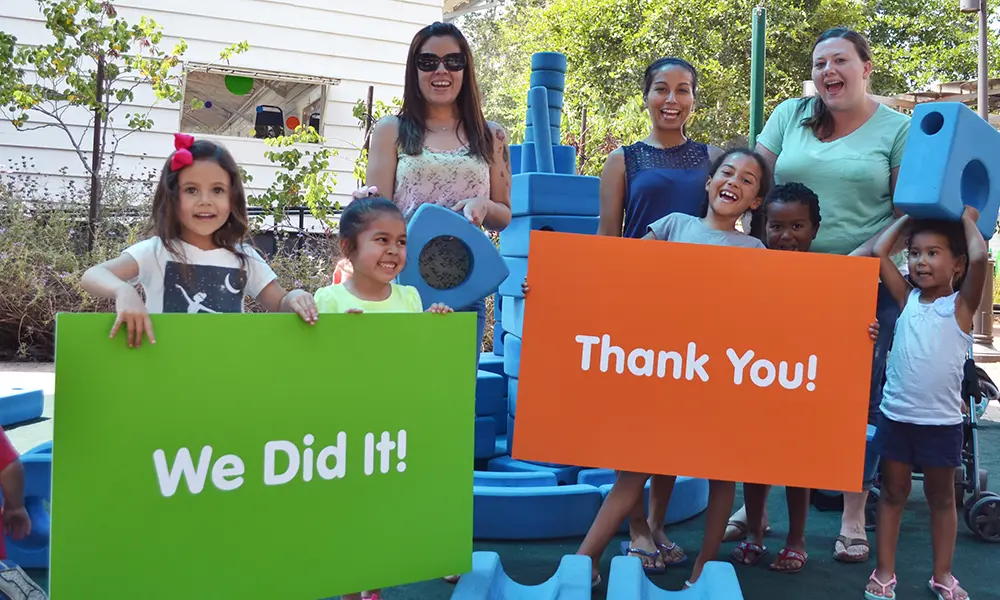
Discover playground grants for schools, funding programs, fundraising strategies, and practical tips to help bring creative, inclusive play spaces to your school community.
Every child deserves a place to play, explore, imagine, and grow. But for many schools, creating or improving a playground can be challenging when budgets are already stretched.
Whether you’re replacing aging equipment, developing an outdoor classroom, creating an inclusive play area, or introducing new opportunities for imaginative play, finding the right funding can make all the difference.
Fortunately, playground grants for schools are available through government agencies, nonprofit organizations, foundations, and community partnerships. Schools can also combine grants with fundraising campaigns, corporate sponsorships, and parent-teacher organization contributions to make their projects possible.
The key is knowing where to look, how to prepare a compelling application, and how to create a realistic budget.
This guide explores playground funding opportunities for 2026–2027, explains how to apply for grants, and offers practical strategies for bringing more creative play to schools and early childhood learning environments.
Funding information reviewed October 2026. Grant deadlines, award amounts, and eligibility requirements can change. Always confirm details with the funding organization before applying.
Why Playground Funding Matters for Schools
Playgrounds are much more than places where children spend recess.
They are environments where students develop physical, social, emotional, and cognitive skills through active exploration.
A thoughtfully designed play space can encourage children to:
- Develop gross motor skills and coordination
- Practice communication and teamwork
- Explore creative problem-solving
- Build confidence and independence
- Participate in imaginative and cooperative play
- Experiment with early STEM concepts
- Develop friendships and social connections
For many schools, playground improvements are also an opportunity to make play more accessible and inclusive.
However, playground budgets often compete with other priorities, including classroom resources, building maintenance, technology, and staffing.
External funding can help schools expand their resources without relying entirely on operating budgets.
Importantly, not every playground improvement requires a complete renovation. Schools can introduce flexible play equipment, outdoor learning materials, and movable building systems to create new experiences within existing spaces.
For example, Imagination Playground Big Blue Blocks encourage children to build, collaborate, and redesign their play environment through open-ended construction activities.
Where Can Schools Find Playground Grants?
There is no single grant program that funds every type of school playground project.
Instead, funding opportunities generally fall into several categories:
- Federal and state recreation grants
- Nonprofit playground development programs
- School improvement and educational grants
- Corporate and community foundation grants
- Accessibility and inclusion funding
- Health, wellness, and outdoor learning grants
Each category has different eligibility requirements.
Some grants fund permanent playground construction, while others may support educational equipment, shade structures, outdoor learning environments, or community recreation improvements.
Before applying, confirm that your proposed project—and your organization—qualifies.
1. KABOOM! Playground Grants and Partnerships
KABOOM! is a national nonprofit organization dedicated to expanding access to quality play spaces.
Through partnerships with communities, municipalities, nonprofits, and corporate supporters, KABOOM! helps develop and improve playgrounds.
Its Community-Built Playspaces program supports projects such as playgrounds, nature exploration areas, and other recreational spaces.
Who May Qualify?
Eligibility depends on the specific funding opportunity and location.
Projects may prioritize communities serving children with limited access to quality play spaces, including lower-income neighborhoods and underserved populations.
Some programs require participating organizations to contribute fundraising, volunteers, or other community resources.
How to Apply
Visit the KABOOM! website to review current opportunities and determine whether your community is eligible.
Prepare information about your existing play space, the children served, community needs, and your organization’s ability to support the project.
Funding tip: KABOOM! partnerships are especially worth investigating for schools planning substantial playground improvements rather than a small standalone equipment purchase.
2. Land and Water Conservation Fund (LWCF)
The Land and Water Conservation Fund supports outdoor recreation projects through state-administered grant programs.
Funding can help eligible public agencies develop or improve outdoor recreation facilities, including certain playground projects.
Who May Qualify?
Eligibility varies by state but generally focuses on state and local governments and other specifically authorized public entities.
A school district may need to partner with an eligible municipality or recreation agency rather than applying independently.
Projects typically must meet public recreation access requirements.
Matching Funds
LWCF grants commonly require recipients to provide a significant local match, often 50% of eligible project costs.
For example, a $100,000 eligible project might require:
- $50,000 in grant funding
- $50,000 in matching funds
The exact requirements depend on the state’s program.
Important Considerations
LWCF projects may involve land-use restrictions, long-term public recreation commitments, and additional planning requirements.
These grants are generally more appropriate for qualifying public recreation facilities than for ordinary classroom equipment purchases.
Contact your state’s parks or natural resources agency for current application information.
3. USDA Community Facilities Direct Loan and Grant Program
Schools and community organizations in eligible rural areas may want to explore the USDA Community Facilities Programs.
These programs provide loans and grants to support essential community facilities in rural communities.
Eligible projects may include certain educational facilities, childcare centers, and related equipment.
Who May Qualify?
Potential applicants include eligible public bodies, nonprofit organizations, and federally recognized Tribes serving qualifying rural communities.
Funding availability depends on community characteristics, financial need, and program requirements.
Can Playground Equipment Qualify?
Potentially, when the equipment is part of an eligible community facility project and the program approves the proposed expense.
Schools should contact their USDA Rural Development state office before assuming that playground equipment is eligible.
Funding tip: This program may be especially relevant when playground improvements are part of a larger rural school or childcare facility project.
4. American Academy of Dermatology Shade Structure Grants
The American Academy of Dermatology Shade Structure Grant Program supports permanent shade structures in places where children learn and play.
For the 2027 grant cycle, the program offers awards of up to $8,000.
Eligible applicants include qualifying public schools and nonprofit organizations serving children.
What Does the Grant Cover?
Funding supports eligible permanent shade structures and installation costs.
It does not generally fund playground equipment itself.
Application Requirements
Applicants must demonstrate an established commitment to sun safety and obtain a recommendation from an AAD member dermatologist.
The published application window for the 2027 awards is October 19 through December 18, 2026.
This opportunity may be useful for schools seeking to improve outdoor play comfort and sun protection.
5. State and Local Playground Grant Programs
Many states offer recreation, outdoor learning, community development, or school improvement funding.
Programs vary considerably by location.
For example:
- California: State Parks administers competitive recreation grants, including Land and Water Conservation Fund opportunities.
- North Carolina: State Parks administers LWCF grants for qualifying local government recreation projects.
- Georgia: The Department of Natural Resources administers LWCF opportunities, while other state programs may support outdoor recreation and shade improvements.
- Florida: The state offers recreation development funding opportunities for eligible local governments.
Schools should also investigate state departments of education, local park agencies, county governments, and regional planning organizations.
Where to Start
Search your state’s official government websites for:
- Playground improvement grants
- Outdoor recreation grants
- School facility improvement funding
- Outdoor classroom grants
- Community recreation development grants
- Inclusive playground funding
Be sure to distinguish grants that schools can apply for directly from those requiring municipal partnerships.
Current Playground Funding Opportunities to Investigate
The following examples illustrate programs with published 2026–2027 information. They are not all unrestricted grants for school playground equipment.
Program | Published funding or opportunity | Important consideration |
KABOOM! Community-Built Playspaces | Location-specific project partnerships | Community participation and eligibility requirements |
AAD Shade Structure Grants | Up to $8,000 | Permanent shade structures, not general equipment |
California LWCF | Up to $6 million per local agency applicant | Eligible public recreation projects; 50% match |
North Carolina LWCF | Up to $750,000 per application | Eligible government/Tribal applicants; matching funds |
Georgia LWCF | 25,000–750,000 requests | Eligible local governments; 50% match |
USDA Community Facilities | Funding varies | Eligible rural community facilities; project approval required |
These programs are useful starting points, but a school should not assume eligibility based solely on the project being educational.
6. Community Foundations and Local Corporate Grants
Some of the most promising funding opportunities are located close to home.
Community foundations, local businesses, regional corporations, and charitable organizations often support projects that benefit children and families.
Potential funding partners include:
- Community foundations
- Local banks and credit unions
- Hospital foundations
- Regional employers
- Civic organizations
- Rotary clubs
- Local education foundations
- Corporate charitable giving programs
Unlike national grant competitions, local funding programs may have a stronger interest in supporting projects that directly benefit their communities.
How to Approach Local Funders
Start by developing a concise project proposal.
Explain the need for the playground improvement, the number of students who will benefit, the expected educational and developmental value, and the funding requested.
Include photographs of the existing space and a clear explanation of the proposed improvements.
Local sponsors may be especially receptive when schools demonstrate broad community support.
7. Grants for Inclusive and Accessible Playgrounds
Creating accessible play opportunities is an important priority for many schools.
Inclusive playground projects may involve:
- Accessible routes and surfacing
- Ground-level play activities
- Equipment supporting different physical abilities
- Sensory-friendly play areas
- Opportunities for cooperative play
- Accessible seating and gathering areas
Schools can investigate disability-focused foundations, local charitable organizations, and eligible government recreation funding programs.
However, funding for inclusive playgrounds is not always offered through a dedicated grant category.
Some projects are supported through broader capital improvement, community development, or recreation programs.
When planning an inclusive playground, involve accessibility specialists and families with lived experience of disability.
Loose parts play can complement accessible playground design by allowing children to participate in different ways.
For example, some children may enjoy arranging building materials, while others contribute by planning structures, telling stories, or collaborating on designs.
Learn more about the developmental benefits of creative materials in our Loose Parts Play: The Complete Guide.
How to Write a Successful Playground Grant Application
Finding a potential funding source is only the beginning.
A strong grant application explains why the project matters and demonstrates that the school has a realistic plan for completing it.
Step 1: Identify the Problem
Begin with a clear description of the need.
For example:
“Our elementary school serves 450 students, but our existing playground offers limited opportunities for collaborative construction, imaginative play, and accessible activities.”
Be specific about the challenges your project will address.
Step 2: Define Your Project Goals
Explain what you want to accomplish.
Possible goals include:
- Increasing access to active play
- Expanding opportunities for inclusive participation
- Supporting creative and cooperative learning
- Introducing hands-on STEM activities
- Improving outdoor learning environments
- Replacing aging or unsafe equipment
The strongest goals connect the proposed improvements to measurable community needs.
Step 3: Describe the Students Who Will Benefit
Include relevant information such as:
- Student enrollment
- Grade levels
- Ages served
- Community demographics, where appropriate
- Existing play opportunities
- Accessibility needs
- Expected frequency of use
Explain how the project will benefit students over time.
Step 4: Demonstrate Educational Value
Playground improvements can support more than physical activity.
For example, open-ended building activities encourage children to experiment with balance, geometry, spatial reasoning, and problem-solving.
Collaborative play also provides opportunities to practice communication, negotiation, and teamwork.
Our article Learning Through Play: The Value of Child-Directed Play explores how child-led experiences can support meaningful learning.
Step 5: Include a Detailed Budget
Grant reviewers want to understand how funds will be spent.
Include equipment costs, installation, site preparation, surfacing, storage, accessibility improvements, shipping, and other necessary expenses.
Whenever possible, obtain written vendor quotes rather than relying on estimates.
Step 6: Explain Long-Term Sustainability
Describe how the playground will be maintained after installation.
Address inspection procedures, staff responsibilities, equipment storage, cleaning, and replacement costs.
A well-developed maintenance plan demonstrates that the school is prepared to protect its investment.
Step 7: Show Community Support
Letters of support from teachers, parents, administrators, community partners, and local organizations can strengthen an application.
Some grant programs specifically require evidence of community involvement.
Step 8: Follow Application Instructions Carefully
Before submitting, confirm:
- Eligibility requirements
- Funding restrictions
- Application deadlines
- Required matching funds
- Supporting documentation
- Project completion deadlines
- Reporting obligations
A strong project can still be rejected if the application is incomplete or fails to meet program requirements.
How to Create a Realistic Playground Budget
Playground projects vary widely in cost depending on the size, location, equipment, and installation requirements.
A complete playground renovation may involve substantial site work, while introducing portable play equipment into an existing suitable space may require a smaller investment.
The following example illustrates how a school might organize a preliminary budget for a modest playground enhancement project.
Example Playground Improvement Budget
Expense | Illustrative amount |
Play equipment and materials | $15,000 |
Site preparation | $3,000 |
Accessibility improvements | $4,000 |
Storage solutions | $2,000 |
Shipping and setup | $1,500 |
Staff training and maintenance supplies | $1,000 |
Contingency reserve | $2,500 |
Total estimated budget | $29,000 |
These are hypothetical planning figures, not actual Imagination Playground prices or vendor quotes.
Don’t Forget Ongoing Costs
In addition to the initial purchase, consider:
- Equipment inspection and maintenance
- Replacement materials
- Cleaning supplies
- Storage upkeep
- Staff training
- Insurance considerations
- Future accessibility improvements
A realistic budget helps schools avoid unexpected expenses and strengthens grant applications.
Playground Fundraising Ideas Beyond Grants
Not every school will qualify for a grant, and even successful applications may cover only part of a project.
Combining funding sources can make playground improvements more achievable.
PTA and PTO Fundraising
Parent-teacher organizations can organize dedicated playground campaigns through family events, donation drives, school celebrations, and community partnerships.
Corporate Sponsorships
Local businesses may contribute funding, materials, or volunteer support.
Consider sponsorship packages that recognize participating businesses according to school district policies.
Community Fundraising Events
Potential events include family fun runs, school festivals, community play days, and benefit auctions.
Crowdfunding Campaigns
Online fundraising can help schools explain their goals, share progress, and encourage contributions from families and alumni.
Confirm school district rules and applicable platform fees before launching a campaign.
Matching Donations
Some employers match charitable donations made by employees.
Schools and affiliated nonprofit foundations can investigate whether their projects qualify.
Phased Playground Improvements
If the full project is beyond the current budget, divide it into manageable stages.
For example:
Phase 1: Introduce open-ended building materials and storage.
Phase 2: Improve accessibility and expand activity areas.
Phase 3: Add permanent equipment or additional outdoor learning features.
Phased improvements allow schools to begin creating new play opportunities while continuing to raise funds.
Can Playground Grants Fund Imagination Playground Big Blue Blocks?
Schools considering Imagination Playground Big Blue Blocks may be able to include them in grant-funded projects when the funding program permits movable play equipment, educational materials, or recreational equipment.
Eligibility depends entirely on the grant.
Some funding programs support permanent construction only. Others allow purchases of equipment that contributes to educational, recreational, or community development goals.
Before applying, ask the funding organization whether portable, open-ended play equipment qualifies.
How to Describe Big Blue Blocks in a Grant Proposal
Rather than focusing only on the equipment itself, explain how it supports the goals of the project.
For example:
“Our proposed play space will incorporate movable, open-ended building materials that encourage children to collaborate, experiment with structural design, engage in imaginative play, and develop spatial reasoning and problem-solving skills.”
This description connects the purchase to educational outcomes.
Why Flexible Play Equipment May Be Worth Considering
Purpose-built movable play materials can provide several practical advantages:
- Multiple play possibilities using the same equipment
- Opportunities for collaborative construction
- Adaptability to different activities and age groups
- Potential integration into STEM and outdoor learning programs
- Flexibility to rearrange the play environment
Imagination Playground Big Blue Blocks are designed to encourage children to build, create, and explore without predetermined instructions.
For schools developing flexible play spaces, they can complement existing playgrounds and provide new opportunities for child-directed learning.
Explore How to Create a Loose Parts Playground for additional ideas about materials, layout, accessibility, storage, and safety.
Frequently Asked Questions About Playground Grants
Are there grants available for school playground equipment?
Yes. Schools may find opportunities through nonprofit organizations, government recreation programs, local foundations, and corporate giving programs. However, not every grant covers playground equipment, and eligibility varies.
Can public schools apply for playground grants?
Public schools may qualify for certain playground funding programs. Some grants accept schools directly, while others require applications through school districts, municipalities, or nonprofit partners.
Can private schools apply for playground grants?
Some private schools may qualify for grants, particularly when they operate as eligible nonprofit organizations. Other programs are restricted to public institutions or government agencies.
How much money can schools receive for playground improvements?
Award amounts vary widely. Some programs provide smaller grants for specific improvements, while government recreation grants may support much larger capital projects. Matching funds or other contributions may be required.
Can grants pay for portable playground equipment?
Some grants permit portable recreational or educational equipment, but others fund only permanent improvements. Always confirm eligibility before including movable equipment in a grant budget.
How can schools fund playground equipment without a grant?
Schools can use PTA/PTO fundraising, local sponsorships, education foundation support, crowdfunding, community events, matching donations, and phased purchasing plans.
What should a playground grant proposal include?
A strong proposal typically includes a needs assessment, project description, measurable goals, detailed budget, implementation timeline, community support, and maintenance plan.
When should schools start applying for playground grants?
Ideally, schools should begin researching opportunities several months before the intended purchase or installation date. Larger projects may require significantly more time for planning, approvals, fundraising, and grant review.
Final Thoughts: Making Better Play Spaces Possible
Creating an engaging school playground is an investment in children’s development, well-being, and learning.
Although funding can be challenging, schools have several potential paths forward.
Government grants, nonprofit partnerships, local foundations, corporate sponsorships, and community fundraising can all contribute to a successful playground project.
The most effective approach begins with a clear vision.
Identify what your students need, determine which improvements will make the greatest difference, develop a realistic budget, and pursue funding sources that align with your goals.
Remember that improving a playground doesn’t always require replacing everything.
Sometimes, introducing new opportunities for imaginative, collaborative, and open-ended play can transform how children experience an existing space.
At Imagination Playground, we believe every child deserves the freedom to create, explore, and imagine.
Planning a playground improvement project?
Discover how Imagination Playground Big Blue Blocks can help bring creative, collaborative play to your school. Contact our team to discuss your project and request product information for your funding proposal.