


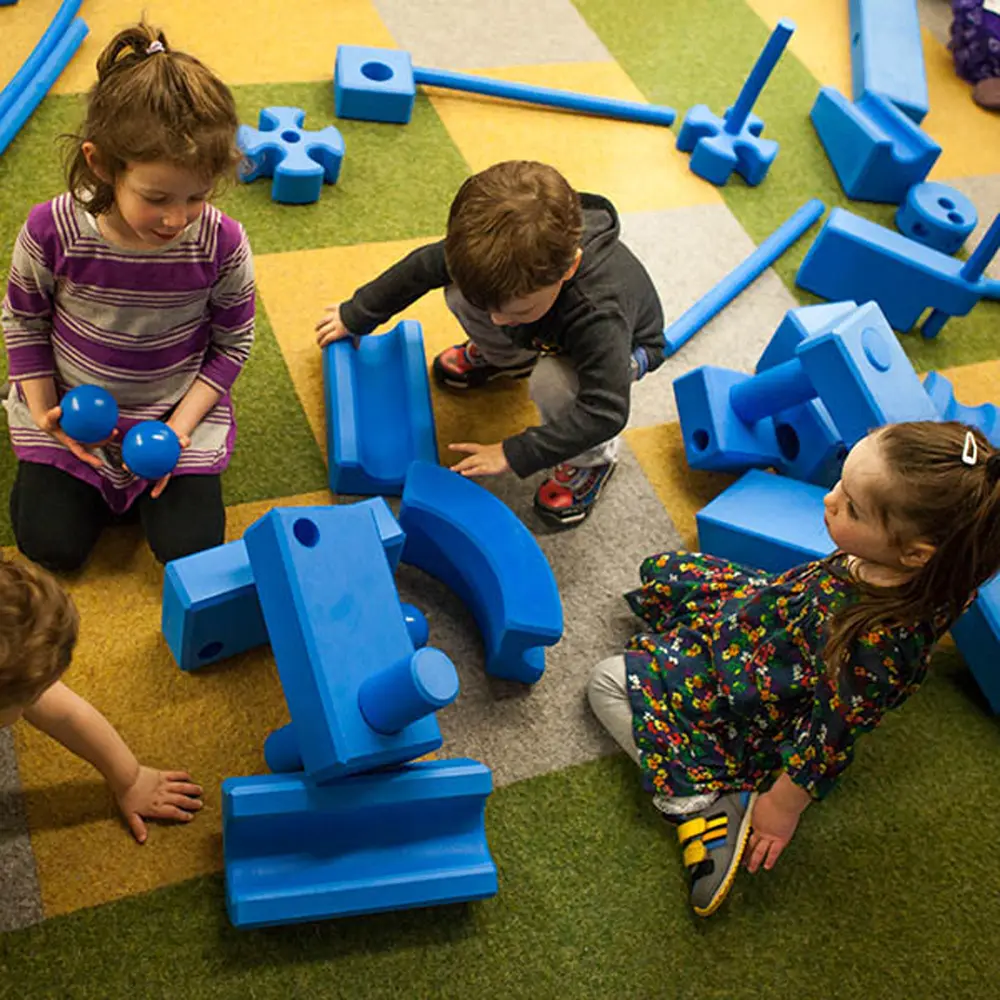
Discover 25 fun, hands-on open-ended play activities that help preschoolers develop creativity, problem-solving skills, confidence, and a love of learning.
Preschoolers are naturally curious. Give them a cardboard box, a handful of blocks, or a collection of everyday objects, and they’ll quickly transform those materials into something extraordinary.
A simple box becomes a spaceship. A pile of blocks becomes a castle. A few pieces of fabric become costumes for an imaginary adventure.
This is the magic of open-ended play.
Unlike activities with specific instructions or predetermined outcomes, open-ended play allows children to explore, experiment, and create freely. There are no right or wrong answers, and the possibilities are limited only by a child’s imagination.
For parents and educators, open-ended play activities offer an engaging way to support early childhood development while encouraging independence, collaboration, and critical thinking.
In this guide, we’ll explore 25 creative open-ended play activities for preschoolers that can be enjoyed in classrooms, childcare centers, playgrounds, and at home.
What Are Open-Ended Play Activities?
Open-ended play activities are experiences that allow children to direct their own play without following a fixed set of instructions or working toward a specific outcome.
Instead of telling children exactly what to build or create, adults provide materials and opportunities for exploration.
For example, rather than asking preschoolers to build a specific house using blocks, an educator might provide a collection of building materials and ask:
“What would you like to create today?”
Children might build houses, bridges, robots, animals, or something entirely unexpected.
This freedom encourages children to think independently, experiment with new ideas, and discover creative solutions.
To learn more about the educational value of this approach, explore our guide to open-ended play and its benefits for children’s development.
Why Is Open-Ended Play Important for Preschoolers?
Preschool is a critical period for developing foundational skills that support future learning.
Open-ended play creates opportunities for children to practice these skills naturally through hands-on experiences.
Some of the most important benefits include:
- Creativity and imagination: Children invent stories, design structures, and explore possibilities without limitations.
- Problem-solving: Experimenting with materials encourages children to test ideas, make adjustments, and overcome challenges.
- Social development: Collaborative play helps preschoolers practice sharing, communication, negotiation, and teamwork.
- Fine and gross motor skills: Building, stacking, carrying, and manipulating objects support physical coordination.
- Early STEM learning: Construction and exploration introduce concepts such as balance, measurement, shapes, gravity, and spatial relationships.
- Confidence and independence: Making their own decisions helps children develop a sense of ownership and accomplishment.
According to the American Academy of Pediatrics, play supports healthy development and helps children build important cognitive, physical, social, and emotional skills.
The following activities make it easy to incorporate these benefits into everyday preschool experiences.
25 Creative Open-Ended Play Activities for Preschoolers
1. Build Anything with Large Foam Blocks
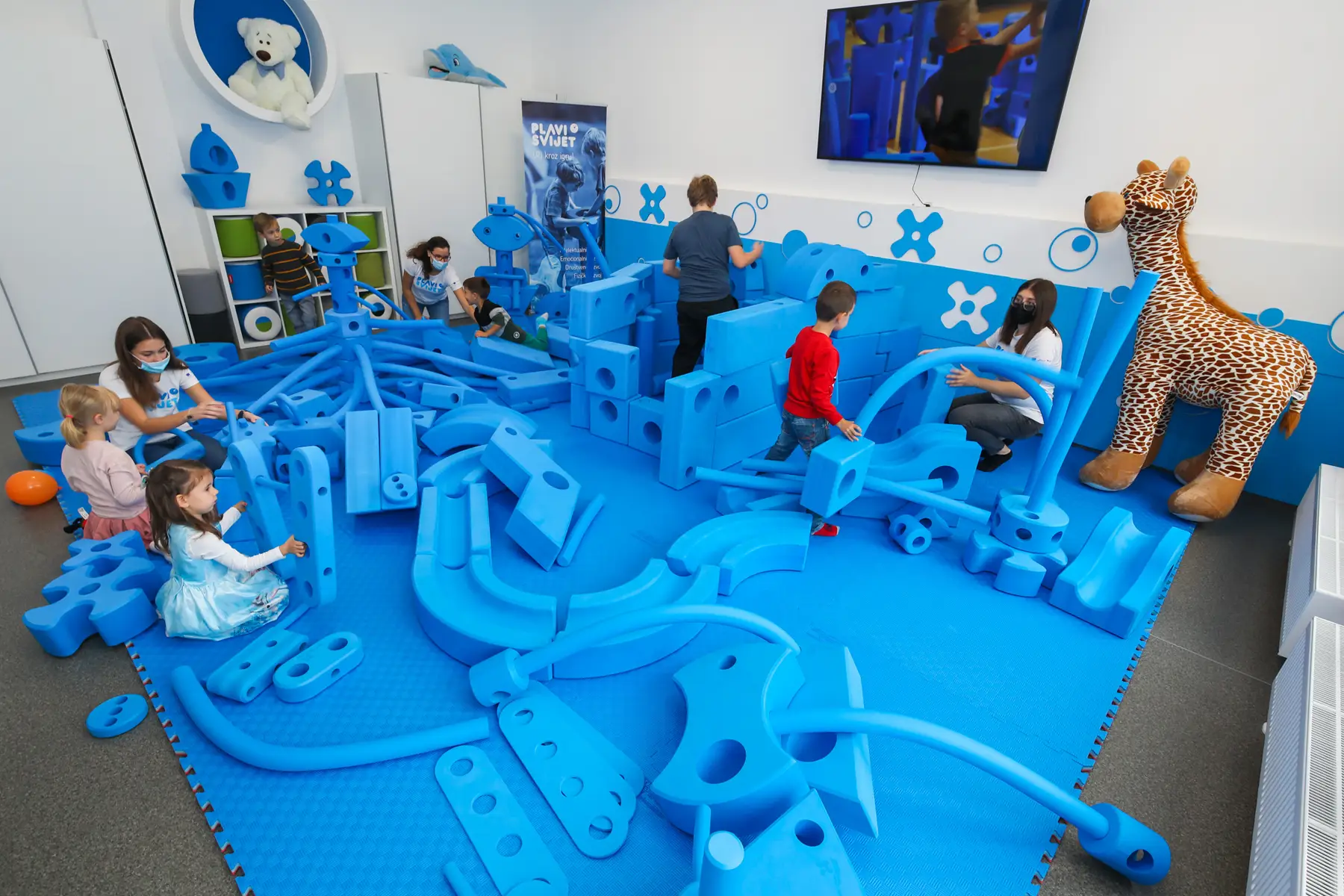
Materials: Large foam building blocks, open floor space
Give preschoolers a collection of large building blocks and let their imaginations take over.
Children might create castles, bridges, tunnels, vehicles, or entire imaginary cities. Because there are no instructions, each structure becomes a unique expression of their creativity.
Large blocks also encourage collaboration as children work together to lift, position, and balance different pieces.
Developmental benefits: Gross motor skills, spatial reasoning, teamwork, problem-solving, and creativity.
Imagination Playground Big Blue Blocks are designed around this philosophy, allowing children to build, experiment, and redesign their creations through active, child-directed play.
2. Create a Cardboard Box World
Materials: Cardboard boxes of different sizes, tape, fabric, washable markers
Cardboard boxes are among the most versatile open-ended play materials available.
Preschoolers can transform them into houses, stores, rocket ships, tunnels, or imaginary vehicles.
Encourage children to combine boxes and invent their own stories.
Developmental benefits: Imagination, spatial awareness, creativity, and storytelling.
3. Explore Loose Parts Play
Materials: Large wooden rings, fabric pieces, blocks, containers, and other age-appropriate movable objects
Provide a variety of materials without suggesting a particular activity.
Children might sort objects, build structures, create patterns, or incorporate the materials into imaginative stories.
Loose parts play encourages children to discover multiple uses for everyday objects.
Developmental benefits: Creative thinking, problem-solving, sensory exploration, and fine motor coordination.
Learn more in our comprehensive Loose Parts Play: The Complete Guide.
4. Design an Imaginary City
Materials: Building blocks, cardboard, toy vehicles, fabric, and recycled materials
Invite children to create their own city using whatever materials are available.
They might build roads, bridges, houses, parks, hospitals, or transportation systems.
As the city grows, children naturally develop stories about the people and places they’ve created.
Developmental benefits: Planning, collaboration, spatial reasoning, and imaginative thinking.
5. Build a Pretend Restaurant
Materials: Play dishes, containers, fabric, paper, and pretend food
Transform a classroom corner into a restaurant where children decide the menu, assign roles, and invent their own dining experiences.
Some children may become chefs, while others take orders or serve customers.
Developmental benefits: Communication, social interaction, early literacy, and imaginative play.
6. Create Art Without Instructions
Materials: Washable paint, crayons, paper, brushes, sponges, and other art supplies
Instead of providing a picture to copy, encourage children to create whatever they imagine.
They might experiment with colors, textures, patterns, or abstract designs.
Focus on the creative process rather than the finished artwork.
Developmental benefits: Self-expression, creativity, fine motor skills, and decision-making.
7. Build an Indoor Obstacle Course
Materials: Foam blocks, floor markers, cushions, and soft play materials
Let children design an obstacle course using safe, age-appropriate materials.
They can create pathways to step over, routes to move around, or tunnels to crawl through.
Encourage them to rearrange the course and invent different ways to move through it.
Developmental benefits: Gross motor development, coordination, spatial awareness, and planning.
Adult supervision and stable, low-height structures are important.
8. Explore Sand and Water Play
Materials: Sand, water, buckets, scoops, funnels, and containers
Sand and water offer endless opportunities for exploration.
Children can pour, scoop, measure, mix, build, and experiment with different materials.
They naturally discover concepts such as volume, texture, and cause and effect.
Developmental benefits: Sensory development, early mathematics, scientific thinking, and coordination.
9. Invent a Puppet Show
Materials: Puppets, fabric, cardboard, and simple props
Provide puppets and materials for creating a stage, then let children invent their own stories.
They can develop characters, imagine adventures, and perform for classmates or family members.
Developmental benefits: Language development, storytelling, creativity, and social confidence.
10. Build Bridges and Tunnels
Materials: Large foam blocks, cardboard tubes, wooden blocks, and construction materials
Encourage preschoolers to explore different ways to connect spaces.
Children might create bridges between imaginary islands or tunnels for toy vehicles.
As they experiment, they discover how shapes, weight, and balance affect their structures.
Developmental benefits: Early engineering, problem-solving, spatial reasoning, and persistence.
This type of hands-on exploration introduces foundational STEM concepts through meaningful play.
11. Create a Nature Art Studio
Materials: Leaves, large stones, sticks, flowers, and other safe natural objects
Take creative play outdoors by inviting children to arrange natural materials into patterns, pictures, sculptures, or imaginary landscapes.
Unlike traditional crafts, there is no predetermined design to follow.
Developmental benefits: Observation, creativity, sensory exploration, and environmental awareness.
12. Design a Pretend Spaceship
Materials: Large blocks, cardboard boxes, fabric, and recycled materials
Children can work together to invent a spaceship and decide where it will travel.
They might create control panels, seats, engines, or imaginary planets.
The activity can evolve into an extended storytelling experience.
Developmental benefits: Collaboration, creativity, communication, and planning.
13. Experiment with Building Towers
Materials: Blocks in different shapes and sizes
Provide building materials and allow children to explore height, stability, and balance.
Some may create tall towers, while others build wide structures or unusual shapes.
When a tower falls, children can investigate what happened and try a different approach.
Developmental benefits: Early engineering, persistence, mathematical thinking, and problem-solving.
14. Create a Pretend Animal Habitat
Materials: Blocks, fabric, natural materials, and animal figures
Children can invent habitats for their favorite animals.
They might create forests, oceans, deserts, or entirely imaginary environments.
Encourage children to explain their designs and tell stories about the animals living there.
Developmental benefits: Storytelling, creativity, early science concepts, and spatial awareness.
15. Explore Music and Movement
Materials: Rhythm instruments, scarves, music, and open space
Let children invent movements, rhythms, and dances.
They can experiment with different sounds, create their own songs, or collaborate on musical performances.
There are no required steps or correct rhythms.
Developmental benefits: Coordination, self-expression, listening, and creativity.
16. Build a Castle or Fort
Materials: Large foam blocks, fabric, cardboard, and cushions
Preschoolers love creating spaces they can imagine as their own.
Give them materials to construct castles, forts, or imaginary homes.
They can design entrances, rooms, walls, and pathways while inventing stories about their creations.
Developmental benefits: Planning, teamwork, spatial reasoning, and imaginative play.
Keep structures low, stable, and appropriate for the children’s ages.
17. Create a Sensory Exploration Station
Materials: Play dough, textured fabric, large natural objects, and sensory containers
Offer a selection of materials with different textures and properties.
Children can squeeze, stretch, arrange, combine, and investigate them freely.
Developmental benefits: Sensory processing, fine motor skills, observation, and creative exploration.
18. Invent a New Playground Game
Materials: Foam blocks, balls, hoops, and open space
Instead of introducing a game with established rules, encourage children to invent their own.
They might create imaginative movement challenges, collaborative building games, or new ways to use familiar playground materials.
Developmental benefits: Leadership, communication, creativity, and cooperation.

19. Build a Transportation System
Materials: Blocks, cardboard, tubes, toy vehicles, and recycled materials
Invite children to create roads, bridges, train stations, airports, or imaginary transportation networks.
Children can decide how everything connects and develop stories around their designs.
Developmental benefits: Planning, spatial reasoning, early engineering, and collaboration.
20. Create a Storytelling Play Space
Materials: Building blocks, fabric, puppets, and imaginative props
Start with a favorite story or let children invent an entirely new one.
They can build the setting, create characters, and act out different adventures.
As the story evolves, children may rearrange the environment to match their imagination.
Developmental benefits: Language development, creativity, sequencing, and communication.
For more ideas about the value of child-directed experiences, read Learning Through Play: The Value of Child-Directed Play.
21. Build with Recycled Materials
Materials: Clean cardboard, paper tubes, cartons, fabric, and safe recycled containers
Provide an assortment of recyclable materials and allow children to design whatever they imagine.
Their creations might include robots, buildings, vehicles, or sculptures.
This activity also introduces the idea of reusing everyday materials creatively.
Developmental benefits: Resourcefulness, imagination, problem-solving, and environmental awareness.
22. Create a Pretend Community
Materials: Blocks, toy figures, cardboard, fabric, and art supplies
Encourage children to create a neighborhood with places they recognize.
They might build a school, library, fire station, grocery store, or playground.
Children can assign roles and invent stories about the people in their community.
Developmental benefits: Social understanding, collaboration, language, and imaginative thinking.
23. Explore Shapes and Patterns
Materials: Blocks, large geometric shapes, colored tiles, and loose parts
Give children materials with different shapes, colors, and sizes.
Some may create repeating patterns, while others invent sculptures, pictures, or complex structures.
Allow the activity to evolve naturally rather than requiring a particular pattern.
Developmental benefits: Early mathematics, observation, creativity, and spatial reasoning.
24. Design a Giant Collaborative Sculpture
Materials: Large foam blocks and open play space
Invite a group of preschoolers to create something together.
Rather than deciding what they should build, allow the children to develop their own concept.
The sculpture may change repeatedly as new ideas emerge.
This activity encourages children to listen, negotiate, share responsibilities, and solve problems together.
Developmental benefits: Teamwork, communication, creative thinking, and gross motor development.
25. Let Children Invent Their Own Activity
Materials: A variety of age-appropriate open-ended play materials
Sometimes the best activity is no planned activity at all.
Provide preschoolers with building blocks, fabric, containers, art materials, and other versatile objects.
Then step back.
Children may combine materials in ways adults never anticipated, creating new games, structures, stories, and discoveries.
Developmental benefits: Independence, creativity, confidence, and self-directed learning.
Our article Stepping Back and Watching Big Ideas Take Shape explores the value of giving children the freedom to lead their own play.
How to Set Up an Open-Ended Play Environment for Preschoolers
Creating an environment that encourages open-ended play doesn’t require an elaborate classroom or expensive equipment.
A few thoughtful choices can make a significant difference.
Choose Versatile Materials
Select materials that children can use in multiple ways.
Large building blocks, loose parts, fabric, cardboard, and natural materials encourage experimentation because they don’t dictate a specific outcome.
Create Space for Movement
Preschoolers learn through physical exploration.
Provide enough room for children to build, move, rearrange materials, and collaborate comfortably.
Keep Materials Accessible
When children can select and organize materials independently, they gain greater ownership over their play experiences.
Low shelves, clearly labeled containers, and accessible storage areas help encourage independence.
Allow Plenty of Time
Meaningful play often develops gradually.
Children may begin with a simple idea, experiment with different approaches, and eventually create something far more elaborate.
Avoid interrupting play unnecessarily or rushing children toward a finished product.
Encourage Collaboration Without Forcing It
Some preschoolers prefer independent exploration, while others naturally seek group activities.
Both approaches have value.
Provide opportunities for collaboration while respecting children’s individual play preferences.
Prioritize Safety
Use age-appropriate materials, supervise play, inspect equipment regularly, and avoid choking hazards, sharp edges, unstable structures, and other unsafe objects.
The Role of Teachers and Parents in Open-Ended Play
One of the most important aspects of open-ended play is understanding when to participate and when to step back.
Adults can support learning without controlling the experience.
Instead of saying:
“Build a tower using these blocks.”
Try asking:
“What could you make with these?”
Other helpful questions include:
- What are you working on?
- How did you decide to build it that way?
- What might happen if you try something different?
- How could you make your structure stronger?
- What else could these materials become?
These questions encourage reflection while keeping children in charge of their ideas.
Sometimes, however, the best approach is simply to observe.
As children experiment, negotiate, and solve problems independently, adults gain valuable insight into their interests, abilities, and developmental progress.
How Imagination Playground Encourages Open-Ended Play
At Imagination Playground, we believe children should have the freedom to create their own play experiences.
Our signature Big Blue Blocks were designed to encourage imagination, collaboration, physical activity, and hands-on learning.
Unlike traditional playground equipment with fixed functions, these movable foam blocks allow children to continually transform their environment.
A collection of blocks can become a castle, spaceship, bridge, vehicle, obstacle course, or an entirely imaginary world.
Because the possibilities are constantly changing, the same materials can inspire new experiences every day.
Imagination Playground is used in a variety of settings, including:
- Preschools and early childhood centers
- Elementary schools
- Children’s museums
- Libraries
- Parks and recreation programs
- Community centers
- Camps and family events
Explore our Where Are the Blue Blocks? stories to see how communities around the world are incorporating creative play into their learning environments.
Frequently Asked Questions About Open-Ended Play Activities
What are examples of open-ended play for preschoolers?
Examples include building with blocks, loose parts play, imaginative storytelling, cardboard construction, sand and water exploration, process art, and pretend play. These activities allow children to make their own decisions without following predetermined instructions.
What is the difference between open-ended and structured play?
Structured play typically involves specific rules, instructions, or expected outcomes. Open-ended play allows children to decide how materials are used and what they want to create. Both approaches can support learning, but open-ended play places greater emphasis on child-directed exploration.
How does open-ended play support preschool development?
Open-ended play provides opportunities to develop creativity, communication, problem-solving, coordination, independence, and social skills. Activities involving construction materials can also introduce early STEM concepts such as balance, shapes, measurement, and spatial relationships.
What materials are best for open-ended play?
Versatile materials such as building blocks, fabric, cardboard boxes, loose parts, art supplies, sand, water, and age-appropriate natural objects work well. Materials that can be used in multiple ways generally offer more opportunities for exploration.
Can open-ended play support STEM learning?
Yes. When children build structures, experiment with balance, compare shapes, and test ideas, they engage in early science, engineering, and mathematical thinking. These hands-on experiences help introduce STEM concepts in meaningful ways.
How long should preschoolers engage in open-ended play?
There is no single ideal duration for every child. Preschoolers benefit from regular opportunities for uninterrupted play, with enough time to explore materials, develop ideas, and revisit their creations. The appropriate length depends on the children’s ages, interests, and needs.
Final Thoughts: Let Imagination Lead the Way
Open-ended play activities give preschoolers something incredibly valuable: the freedom to explore their own ideas.
Whether they’re building a castle, inventing a game, creating an imaginary city, or experimenting with everyday materials, children are developing skills that support learning both inside and outside the classroom.
For educators and parents, the goal isn’t to provide the perfect activity or teach children exactly what to create.
It’s to provide interesting materials, a supportive environment, and the opportunity for imagination to flourish.
At Imagination Playground, we believe the best play experiences begin with a simple invitation:
What will you create today?
Discover how Imagination Playground Big Blue Blocks can bring creative, collaborative, open-ended play to your school, preschool, museum, library, or community.
Continue Exploring Creative Play
For more inspiration, explore these related Imagination Playground resources: